Current practice
- SpO₂
- Heart rate
- How you feel
- Previous experience
Four thin signals, read one at a time. Useful in the field — but a weak predictor of what happens next.
Predictive altitude physiology
ALTYPHY combines wearable sensors, physiology and AI to predict individual adaptation — before and during exposure to altitude. Built with mountaineers, guided by the science.

The problem
Altitude is not just a question of fitness. Same preparation, same itinerary — and one person acclimatizes while the other doesn't. Today's tools can't reliably tell you in advance which is which.
Current practice
Four thin signals, read one at a time. Useful in the field — but a weak predictor of what happens next.
What adaptation actually depends on
Hypoxia isn't a single-biomarker problem. It's a systems problem — which is exactly how we model it.
Key insight — tolerance to hypoxia is…
Many control systems interact. No single number tells the story.
What held true on your last trip may not hold on this one.
Between people, and within the same person over time.
The science
Millet & Bourdillon (2026) argue that altitude adaptation isn't decided by oxygen transport alone, but by an individual's regulatory reserve — the integrated capacity of several physiological control systems to hold homeostasis under hypoxic stress.
We're building toward that paradigm rather than around it: multimodal wearable data, quantified adaptation, honest uncertainty.
01 · Systems, not single variables
Acclimatization is a systems-physiology problem, and behaves like one.
02 · Interactions decide outcomes
Respiratory, cardiovascular, autonomic, cerebrovascular and diffusive systems interact — the interaction is the signal.
03 · Dynamic markers predict better
How your physiology moves under load tells us more than any resting value.
The platform
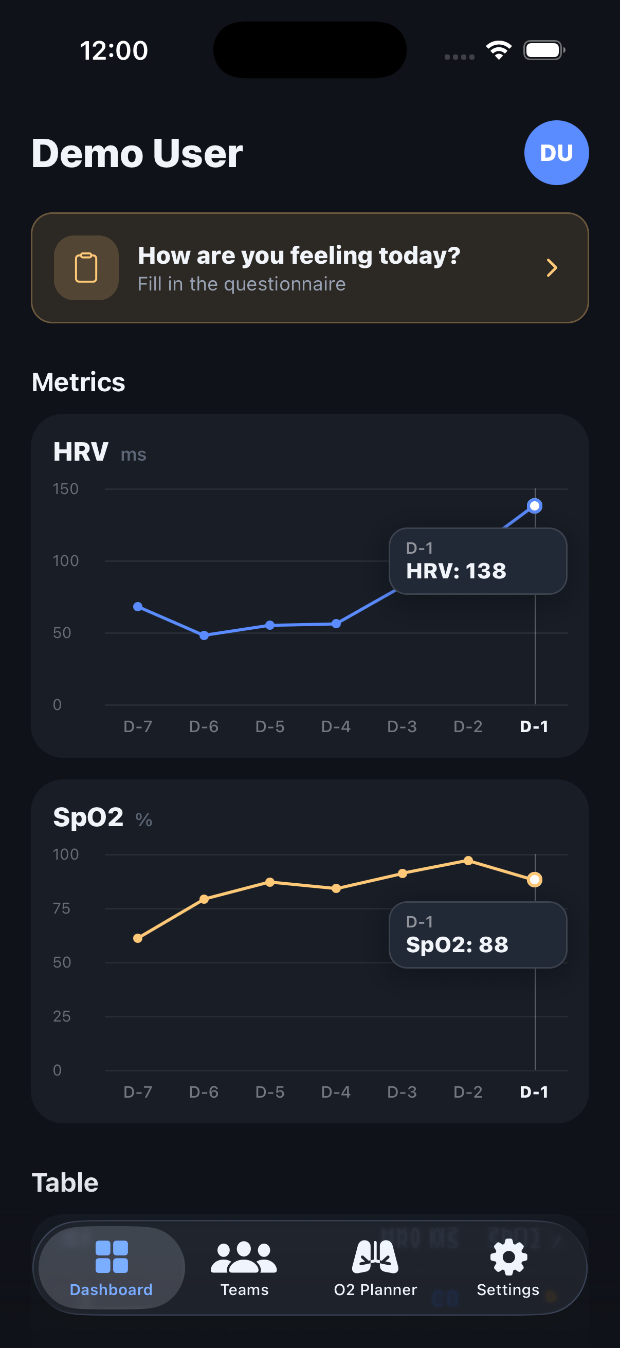
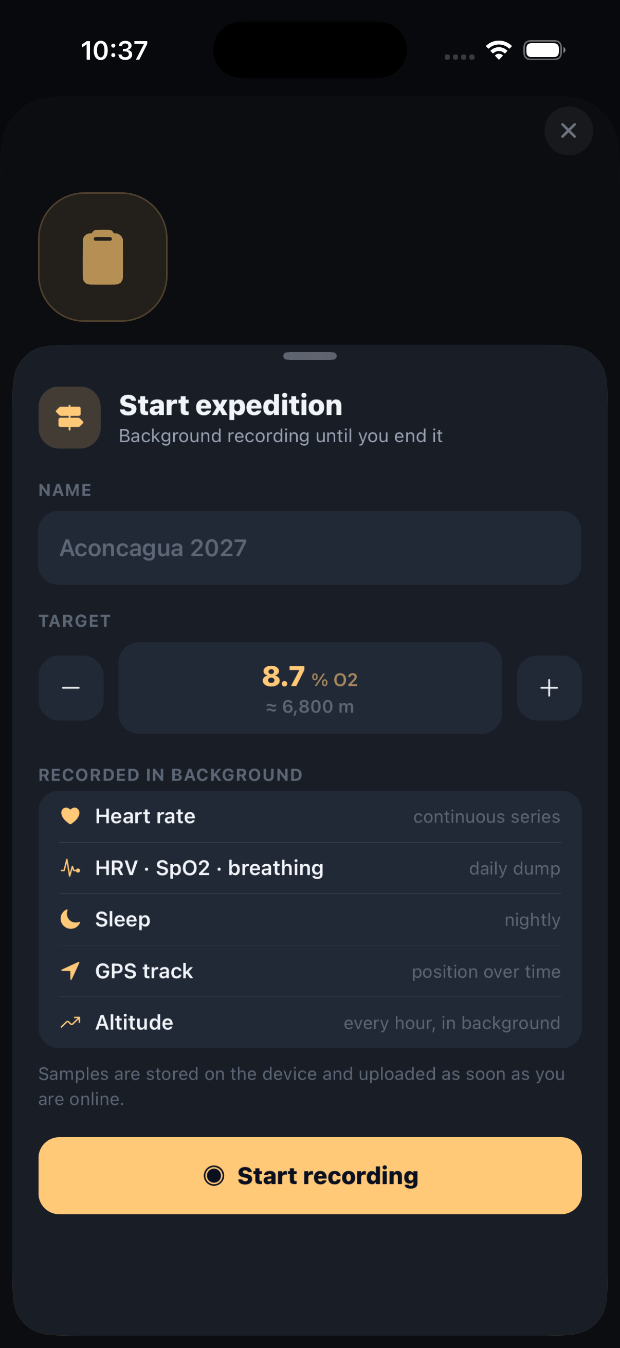
Device-agnostic by design — bring the watch, strap or ring you already train with. One app carries you from the gym to the summit push, in two modes.
Training mode
Your physiological baseline, daily readiness, HRV and SpO₂ trends, and a preparation plan that adjusts as the numbers move.
Expedition mode
Records wearable data in the background without signal, grades risk low / moderate / high, and gives you a full picture to review after the trip.
For climbers & athletes
For operators, guides & coaches
Who we are
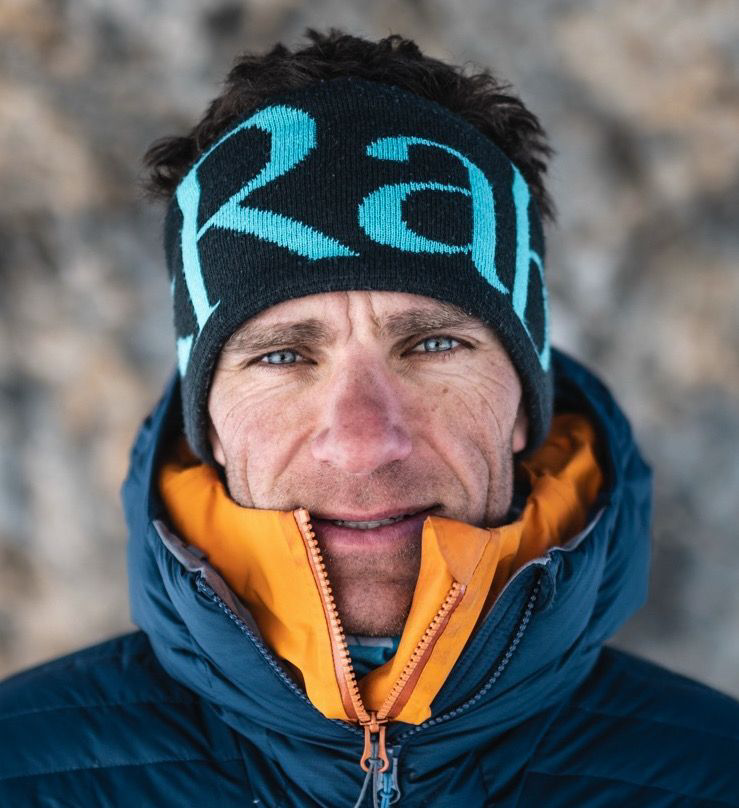
High-altitude performance coach & mountain athlete · Founder
Martin turns altitude science into practical preparation for ambitious climbs. Based in Chamonix for 15+ years, he coaches mountaineers, trail runners and endurance athletes — including climbers who have reached Everest and other Seven Summits.
His expertise is mountain-proven, not only modelled — and that's the point. ALTYPHY is being built from inside the community it serves, with hypoxia research at Mid Sweden University on the other side of the same desk.
The people behind the model
A small team, deliberately mixed: people who go up, people who read the data, and people who keep us honest about what it means.
Dr Barney Wainwright
Sport scientist
Senior Research Fellow, Leeds Beckett University; applied sports science at Sports Metrics Ltd.
Dr Patrycja Jonetzko
Medical consultant
Cardiothoracic anaesthesia and critical care, with high-altitude expedition medicine. Peninsula Heart Clinic, Plymouth.
Jan Kotrs
Bioinformatics
Digital health and research platforms; PhD candidate, FI MUNI.
Prof Grégoire Millet
Advisor · UNIL Lausanne
Professor of exercise and environmental physiology — responses to exercise in hypoxia and heat.
Dr Dana Lis
Advisor · science to impact
Translational research and sports nutrition, elite sport and performance. Truckee, California.
Also with us
University collaborations, multiple expedition datasets, and 60+ successful Everest clients whose data informs the model.
Where we are, honestly
The MVP is in development and the first users are coming on board this season. If you join now you're shaping the model, not buying a finished product — we think that's the honest way to say it.
2026 · Validation
First pilot users, first paid assessments, expedition monitoring in the field.
2027 · Commercial MVP
Expedition partners on the platform, recurring access for coaches and teams.
2028 · Scale
Professional platform, deeper sensor integration, clinical validation work.
Tell us about the trip and we'll tell you plainly whether we can help — and what we'd need from you to start a baseline. No newsletter treadmill: Martin reads these himself.
Prefer email? martin@altyphy.com · Chamonix, France